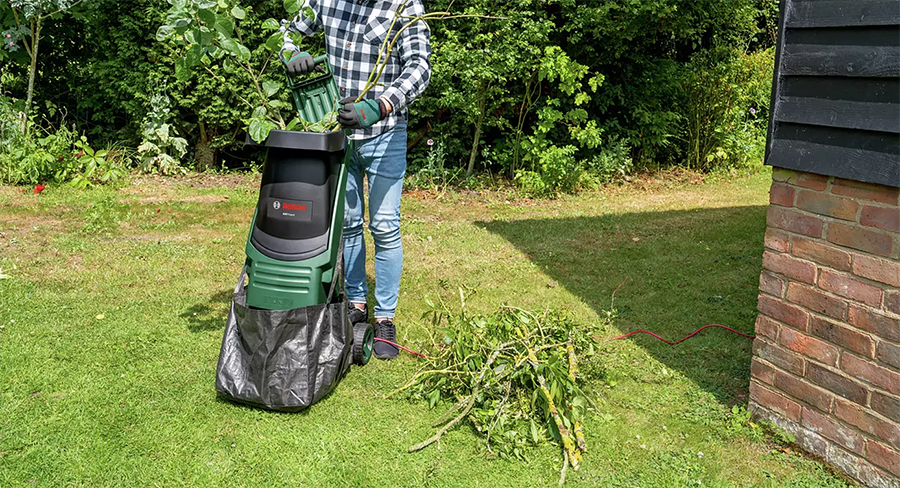
Pruning trees, cutting back hedges and tidying up shrubs can leave you with a mountain of branches and garden waste. A garden shredder can help turn that pile into smaller, more manageable pieces, making it easier to dispose of or reuse around the garden.
But with different names such as impact shredders, crushing shredders, mulchers and rapid shredders, choosing the right type or understanding these terms can be confusing. In this blog we’ll look at the different types and their uses.
Here is what you need to know.
What does a garden shredder do?
Garden shredders break down woody garden waste into smaller pieces. This can significantly reduce the volume of waste you need to dispose of, while the shredded material can often be used as mulch or added to compost where suitable.
Tip: Always check the maximum branch diameter for your particular shredder. Many will have similar performance, but most domestic use garden shredders are designed for smaller branches and woody stems, rather than large logs or tree trunks.
Different types of garden shredder
The names used for shredders can vary between manufacturers, but they generally fall into a few main types.
Impact or rapid shredders use fast spinning blades to chop garden waste into smaller pieces (almost like an upside-down lawn mower). They are often a good choice for a mixture of softer green waste, leaves, twigs and smaller branches. They can produce relatively small pieces, although they can be noisier while operating.
Crushing or roller shredders use a rotating roller or cutting mechanism to pull material through the machine and crush or cut it. They tend to be quieter and are particularly useful for woody branches. The finished material can be more chunky or fibrous than material produced by an impact shredder.
You may also see shredders described as mulchers. This does not necessarily mean they use a completely different technology. The term is often used to describe a machine that reduces garden waste into smaller pieces suitable for use as mulch.
Some machines are designed to handle different types of material, so always check the manufacturer's guidance rather than choosing based on the name alone.
What are the benefits of shredding?
Shredding can make garden waste much easier to manage. Smaller pieces take up less space, making collection, composting or disposal simpler.
Shredded woody material can also be useful around the garden as mulch, helping to cover soil, reducing weeds and crucially in hotter times, reduce water loss.
If you regularly prune trees, shrubs or hedges, having your own shredder can also save time and trips to dispose of bulky garden waste. For occasional jobs involving larger branches, hiring a more powerful machine may be more practical.
Basic maintenance
Good maintenance helps keep your shredder working effectively.
After use, switch it off, unplug it and allow moving parts to stop completely before cleaning or carrying out any maintenance.
Remove garden debris from the feed area and collection container, following the manufacturer's instructions.
Keep cutting parts clean and check them regularly for signs of wear or damage. A blunt or damaged cutting mechanism can affect performance.
Always follow the manufacturer's guidance for cleaning, lubrication, blade replacement and servicing.
Read our Blog: The Importance of Maintenance and Oiling
Common problems and troubleshooting
The shredder keeps blocking: Do not force material into the machine. Switch it off and disconnect the power before clearing a blockage. Some models have a reverse function to help release material.
It struggles with branches: Check that you are not exceeding the recommended branch diameter and that the material is suitable for your machine.
- The moisture levels in the plant material can cause poorer cutting performance – some time if too wet (fresh growth to flexible to cut) or equally if too dry (with larger branches making them harder and more brittle.
The shredder is noisy or vibrating: Stop using it and check for trapped debris and blockages, also assess for loose parts or damaged cutting components. Ensure the shredder is on level ground. If the problem continues, consult the manufacturer's guidance or manual for next steps.
Top tip: Always use the recommended protective equipment, such as safety glasses, gloves and sturdy footwear, and never put your hands into the feed chute.
Read our Blog: Garden Tool Maintenance: Keep Your Equipment in Top Shape
Ready to Tidy Up?
A garden shredder can make light work of branches, twigs and other woody garden waste, helping you reduce bulky piles and make better use of your garden waste. Whether you choose an impact shredder for fast chopping or a crushing model for quieter, tougher branches, the right choice depends on the type of waste you regularly deal with.
View the full range here