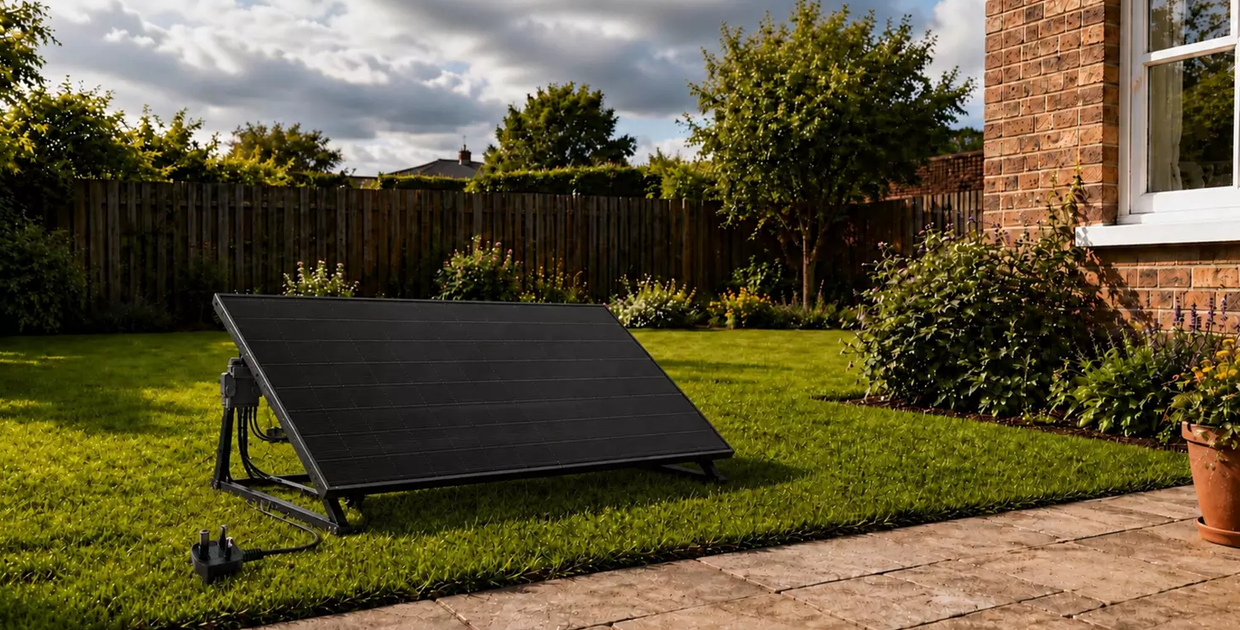
As more households look for ways to reduce energy costs and improve sustainability, the UK market has received a welcome boost to the options at available. New legislation has recently passed allowing plug-in solar panels to be fitted at home without the need of an electrician.
Unlike traditional rooftop solar systems, plug-in solar kits offer a simple and accessible way to generate renewable electricity at home without extensive installation work.
What Are Plug-In Solar Panels?
Plug-in solar panels are compact solar energy systems designed to generate electricity from daylight and feed it directly into your home's electrical system through a suitable outdoor 3 pin UK socket.
A typical plug-in solar kit includes:
- One or more solar panels
- A microinverter
- Mounting equipment
- Connection cables
- Performance monitoring via a smartphone app
How Do They Work?
The process is simple:
- Solar panels capture daylight and generate electricity.
- A microinverter converts the electricity into a form suitable for household use.
- The generated power is supplied to your home's electrical circuits through a normal plug socket.
- Appliances running during daylight hours use this electricity first.
- Any additional electricity is exported to the grid, depending on local regulations and system configuration.
The technical bit
The solar panels produce direct current (DC) electricity, while the microinverter converts it into alternating current (AC) electricity that household appliances can use. Electricity generated by the panels is used by devices already running in the home, helping to reduce the amount of power imported from the electricity grid.
Many systems also allow homeowners to monitor energy generation through a smartphone app, providing real-time performance data.
Where Can Plug-In Solar Panels Be Installed?
For best performance, plug-in solar panels should be installed in a location that receives plenty of sunlight throughout the day.
Common installation locations include:
- Gardens
- Patios
- Driveways
- Lawns
- Ground-level outdoor spaces
Ideally, panels should face south and be positioned at an angle that maximises exposure to sunlight while avoiding shading from trees, fences, buildings, or other obstacles.
Where Should They Not Be Installed?
Not every location is suitable for plug-in solar systems.
Installation is generally not recommended in:
- Areas with significant shade
- Locations with poor structural support
- Unsafe elevated locations
- Areas exposed to excessive wind without suitable mounting arrangements
- Locations without access to an appropriate outdoor electrical socket
If installation is being considered on a wall, flat roof, or any location above ground level, it is advisable to seek guidance from a suitably qualified professional. They can assess factors such as:
- Structural strength
- Wind loading
- Mounting requirements
- Drainage
- Safe access
- Cable routing
Ensuring the site is safe and suitable is essential for long-term performance and safety.
What Are the Advantages of Plug-In Solar Panels?
Lower Electricity Bills
One of the key benefits is reducing the amount of electricity purchased from the grid. During daylight hours, solar-generated electricity can help power everyday household appliances and reduce energy consumption from your supplier.
Easy Installation
Compared to traditional rooftop solar installations, plug-in systems are generally easier and quicker to install, making solar energy more accessible for many households.
Renewable Energy Generation
Plug-in solar panels generate clean energy from daylight, helping to reduce carbon emissions and support a more sustainable lifestyle.
Real-Time Monitoring
Many systems include app-based monitoring, allowing users to track electricity generation and system performance from their smartphone.
Flexible Sizing Options
Plug-in solar systems are available in a range of sizes, allowing homeowners to choose a setup that suits their available space and energy requirements.
Moveable
This is the big difference between traditional and plug-in solar. If the location needs to change across the year for better efficiency, this can be done reasonably easily. Also, a great benefit from plug in solar, is that if you were to move house, the solar can move with you!
How Much Electricity Can They Generate?
Generation varies depending on several factors:
- System size
- Weather conditions
- Time of year
- Panel orientation
- Installation angle
- Shading
Smaller systems may generate enough electricity to offset the consumption of devices such as routers, televisions, laptops, and refrigerators during the day. Larger systems can contribute a greater proportion of household electricity demand.
It is important to remember that solar output changes throughout the day and is highest during bright daylight conditions.
What Happens During a Power Cut?
A common misconception is that solar panels continue powering a home during a power outage.
In standard UK plug-in solar systems, this is not the case. Plug-in solar systems are typically connected to the electricity grid. For safety reasons, they include a feature known as anti-islanding protection.
If a power outage occurs, the system automatically shuts down. This prevents electricity from being sent back into the grid while engineers may be carrying out repair work on power lines.
Once grid power is restored, the system will normally restart automatically and resume generating electricity after completing its safety checks.
Is a Plug-In Solar System Right for You?
Plug-in solar panels can be an excellent option for households looking to lower energy bills, generate renewable electricity, and take a first step into solar power without committing to a full rooftop installation.
They work particularly well in sunny outdoor spaces where electricity can be consumed during daylight hours. While they are not designed to power an entire home or provide backup power during outages, they can make a meaningful contribution to reducing grid electricity usage and improving energy efficiency.
For many households, plug-in solar offers a simple, practical, and environmentally friendly way to start generating their own electricity.
For our full range of Plug In Solar bundles click here