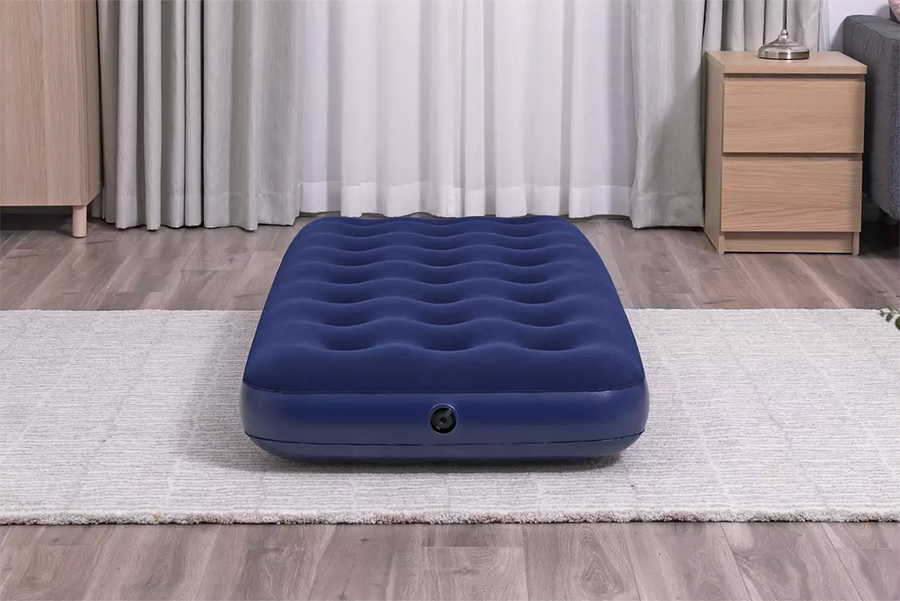
An airbed can be a comfortable and convenient sleeping solution, whether you're camping, hosting overnight guests or travelling. However, the most common question and complaint people have is, "Why does my airbed keep going down?"
In many cases, an airbed losing air does not necessarily mean it has a puncture. Changes in temperature, natural stretching and normal use can all affect how firm it feels overnight. Understanding why this happens can help you get a better night's sleep and keep your airbed in good condition.
Is it normal for an airbed to go down?
Yes, to a certain extent. Most airbeds will lose a small amount of firmness overnight, particularly when they are brand new.
When you first inflate a new airbed, the material naturally stretches as it settles into shape. This can make it feel as though it is losing air, even when there isn't a leak. Many manufacturers recommend inflating the airbed, leaving it for several hours, and then topping it up before its first use.
Temperature changes can affect inflation
One of the biggest reasons an airbed appears to go down is the temperature.
Warm air expands, while cold air contracts. If you inflate your airbed during the day and the temperature drops overnight, the air inside the mattress will naturally contract, making the bed feel softer by the morning.
This is perfectly normal and doesn't necessarily indicate a fault. If you're camping, you may simply need to add a little extra air before bedtime.
Could it be a puncture?
If your airbed loses a significant amount of air within a few hours, there may be a puncture or a slow leak.
Before assuming the worst, check:
- The inflation valve is fully closed and securely sealed.
- The valve cap is fitted correctly.
- There are no visible tears or damage.
- The airbed has not been overinflated.
If you suspect a puncture, carefully inspect the surface. Small leaks can often be found by listening for escaping air or by applying a solution of washing up liquid and water around the seams and valve. Bubbles may indicate where air is escaping.
Avoid overinflating your airbed
It can be tempting to inflate an airbed until it feels rock solid, but overinflation can place unnecessary strain on the seams and internal structure.
Instead, inflate the mattress until it feels firm but still has a little give when you press down on it. This allows the material to flex naturally when someone lies on it.
Follow the recommended weight limit
Every airbed has a maximum weight capacity, which should always be followed.
Exceeding the recommended limit increases the pressure inside the mattress and places extra strain on the seams and internal air chambers. Over time, this can lead to stretching, leaks or permanent damage.
If more than one person will be using the airbed, make sure the combined weight remains within the manufacturer's guidance.
Looking after your airbed
A little care can help your airbed last much longer.
To keep it in good condition:
- Inflate it according to the manufacturer's instructions.
- Avoid placing it on sharp stones, twigs or rough ground.
- Use a groundsheet or protective mat when camping.
- Keep pets with sharp claws away from the surface.
- Clean and dry the airbed before packing it away.
- Store it in a cool, dry place away from direct sunlight.
Regularly checking the valve and seams for signs of wear can also help prevent small problems from becoming bigger ones.
Sleep comfortably every time
A slightly softer airbed in the morning is often completely normal, especially during colder nights or when the mattress is new. However, if your airbed is rapidly losing air, checking the valve, seams and surface for damage is worthwhile.
With proper care, correct inflation and sensible use, your airbed can provide a comfortable and reliable place to sleep for many camping trips and overnight stays to come.
For out full range of camping kit and airbeds click here