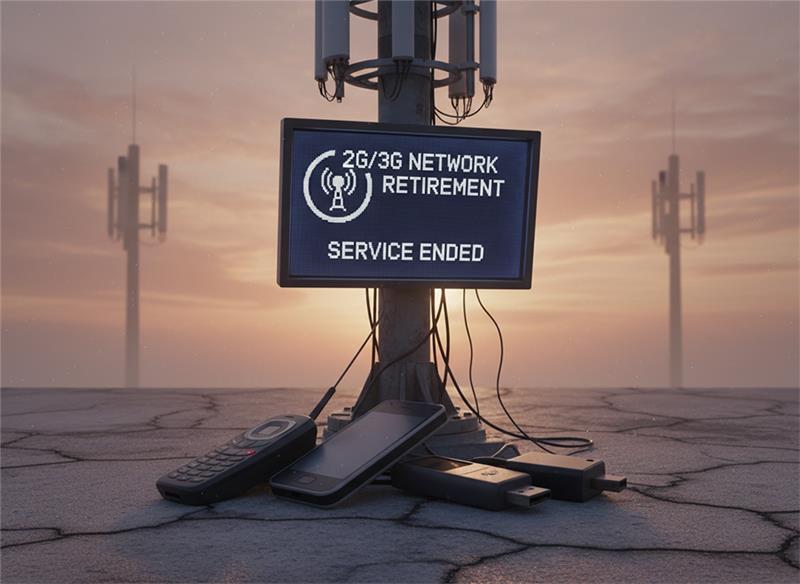
Since it was announced by the government in December 2021, UK mobile network providers have been working to decommission older phone networks such as 2G and 3G. Over the next weeks and months, more providers have announced they are switching off these networks. The government's plan is for 2G and 3G to be phased out by 2033.
This transition marks a significant milestone in telecommunications, but it also raises important questions for businesses and individuals who rely on these networks. Let’s break down what’s happening, why it’s happening, and what you can do to stay connected.
What Are 2G and 3G Networks?
2G (Second Generation): Introduced in the early 1990s, 2G brought digital voice calls and SMS messaging. It was revolutionary at the time but offers very limited data speeds.
3G (Third Generation): Launched in the early 2000s, 3G enabled mobile internet access, video calls, and faster data transfer. It paved the way for smartphones and mobile apps.
These networks have served us well for decades, but technology has moved on.
Why Are They Shutting Down?
There are several main reasons for shutting down 2G and 3G:
Spectrum Reallocation: This sounds technical but simply put means mobile operators need to free up radio frequencies for faster technologies like 4G and 5G, which offer higher speeds and lower latency.
Maintenance Costs: Supporting outdated infrastructure is expensive and inefficient.
Security and Reliability: Older networks lack modern security features and can’t handle today’s data demands.
Who Will Be Affected?
While most smartphones already use 4G or 5G, many older devices still depend on 2G or 3G, including:
Older Mobile Phones: Mobile phones that are more than 10 years old may lose service. To check if your mobile is compatible with 4g or 5g, check in the mobiles “Mobile Network” setting. Alternately find your mobiles model, then search on the manufacturer's website.
Burglar Alarms: Many alarm systems use SIM cards for remote monitoring and alerts.
Care Alarms Devices: Devices for vulnerable individuals often rely on 2G/3G connectivity.
Industrial Equipment: Some IoT devices in factories or logistics that still use these networks.
Unfortunately, when these networks shut down and your device is not 4g or 5g compatible, it will lose mobile data and may lose the ability to make calls or texts.
What Are the Solutions?
Contact Your Provider: Mobile operators often provide guidance and sometimes discounts for upgrading. Take stock of your devices at home or in your business, so you know what will or might be affected. Each item may need to be assessed so you can pick the best solution for your upgrade.
Upgrade Devices: Replace older phones, alarms, and IoT equipment with models that support the 4G or 5G networks.
Upgrade Kit Options: Some manufacturers offer upgrade kits for existing alarm systems.
Final thoughts
The shutdown has been talked about for some time and the change is happening now, so don’t wait until the last minute. If you are uncertain contact your mobile operator for help and advice. Check any device that uses a SIM card, especially alarms and care systems. Planning for upgrades now will help to avoid painful service interruptions.