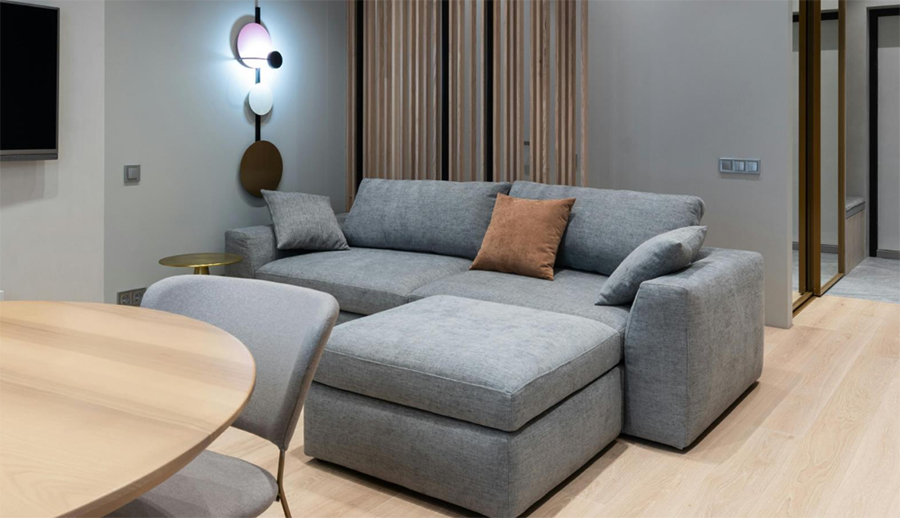
Sofas and armchairs are used every day, so carrying out simple routine checks can help keep them safe, supportive, and looking their best for longer. A quick inspection every few months can help you spot early signs of wear and prevent small issues from becoming bigger problems.
Check Stability and Balance
Start by checking that your sofa or chair feels stable. Gently rock it from side to side and front to back. It should feel solid and balanced on the floor. If you notice any wobbling, this could indicate loose fixings or uneven legs. Where accessible, tighten screws or bolts in line with your assembly instructions. Keeping fixings secure helps maintain both safety and durability.
Inspect Legs and Feet
The legs and feet support the full weight of the furniture, so it’s important to ensure they are secure. Check that each leg is firmly attached and not cracked, bent, or damaged. Make sure all feet sit evenly on the floor. If needed, adjust or reposition the furniture to ensure balance. Consider fitting felt pads to protect flooring and reduce movement.
Examine Arms, Backs and Frame
Arms and backrests are high-use areas and can loosen over time. Apply gentle pressure to check they feel firm and secure. Listen for any unusual creaking or movement. While some natural movement can occur with regular use, excessive shifting may suggest loose internal fixings. Identifying this early can help prevent further wear.
Check Seat Support
Sit on different areas of the sofa or chair to check the level of support. The seat should feel comfortable and even across the surface. If you notice sagging, dips, or uneven firmness, this may indicate that internal supports, springs, or padding are wearing. Monitoring changes in comfort can help you decide when further attention may be needed.
Inspect Cushions and Padding
If your cushions are removable, take time to plump and rotate them regularly. This encourages even wear and helps maintain their shape. Check for flattening, lumps, or damage to the inner padding. Ensure cushions are replaced correctly after cleaning or use to avoid uneven pressure on certain areas.
Look Over Upholstery and Stitching
Examine fabric or leather upholstery for signs of wear, thinning, or fading. Pay particular attention to seams and stitching, especially around seat edges and armrests. Loose threads or small seam splits should be addressed promptly to prevent further damage. For leather furniture, check for dryness or cracking and use appropriate care products as recommended in your product guidelines.
Read our blogs:
The Ultimate Guide to Cleaning and Maintaining Leather Furniture
Caring for Woven Fabrics: Tips for Maintaining Your Elegant Furniture
How to Care for Velvet and Chenille
Keep Furniture Clean and Well Positioned
Regular cleaning plays an important role in maintenance. Vacuum fabric upholstery to remove dust and debris, and wipe down leather surfaces using suitable products. Avoid placing sofas and chairs in direct sunlight or near radiators and other heat sources, as prolonged exposure can cause fading, drying, or warping.
Read our blog: Sit Pretty: The Ultimate Guide to Sofa Maintenance
When to Seek Additional Support
If you notice ongoing instability, significant sagging, or visible damage that cannot be resolved with basic checks, it may be time to seek further advice. Carrying out routine maintenance helps extend the life of your furniture and ensures it remains safe and comfortable for everyday use.