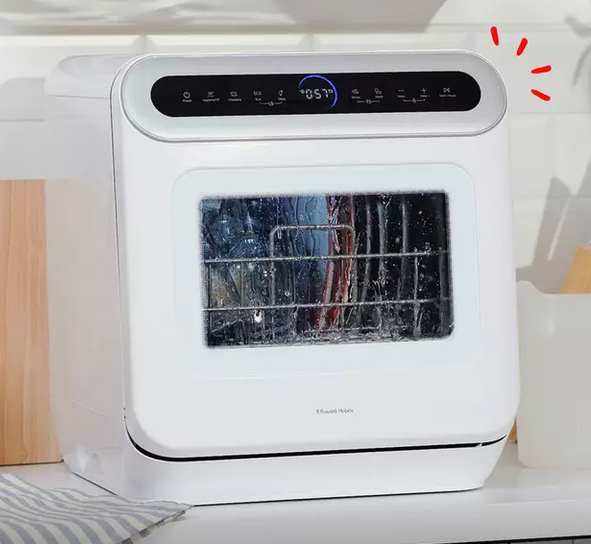
Fed up with washing up but short on kitchen space? A tabletop dishwasher could give you the convenience of a dishwasher without needing room for a full size appliance.
These compact machines are designed to sit on a suitable worktop and are ideal for smaller households, flats, rented homes or anyone who simply does not have enough space for a standard dishwasher.
But how do they work, and are they more efficient?
What is a tabletop dishwasher?
A tabletop dishwasher is a smaller version of a standard dishwasher. Instead of being built into your kitchen or standing on the floor, it is designed to sit on a sturdy, level worktop.
They use water, detergent and heat to clean your dishes, just like a full-size dishwasher. The main difference is the smaller capacity.
This makes them particularly useful for one or two people, or households that do not produce enough washing to fill a larger dishwasher.
Some tabletop dishwashers connect to your kitchen water supply, while others have a water tank that can be filled manually. Always check the manufacturer's instructions to understand what is required for your appliance.
Do tabletop dishwashers save space?
Yes. Their compact design is one of their biggest advantages.
If you do not have room for a standard dishwasher, a tabletop model can make use of otherwise unused worktop space. They can be particularly handy in smaller kitchens where every cupboard and floor space counts.
Before buying, measure your available space carefully. Remember to check the appliance's height, width and depth, and make sure there is enough room to open the door fully.
You will also need to consider where the water and drainage connections will go, depending on the type of dishwasher you choose.
Do they use less water?
They can use less water than a larger dishwasher, particularly when washing smaller loads. However, this will depend on the individual appliance and programme selected.
Using the dishwasher properly can also help reduce unnecessary water use.
Try to:
- Wait until you have a suitable load before starting a cycle.
- Use an eco-programme when appropriate.
- Scrape food from plates instead of rinsing them under a running tap.
- Avoid running the dishwasher unnecessarily.
Always check the manufacturer's instructions for loading and cleaning recommendations.
Are tabletop dishwashers more energy efficient?
Not automatically. A smaller dishwasher does not always mean lower energy consumption.
When comparing models, check the energy label and look at the energy and water consumption figures. Eco programmes are designed to use resources efficiently, although they can take longer to complete.
The most suitable option will depend on how much washing you have and how often you use the dishwasher.
How to keep your tabletop dishwasher running efficiently
Regular maintenance can help your dishwasher clean effectively and prevent common problems.
- Clean the filter regularly to remove trapped food and debris and wipe around the door seals to prevent dirt and residue building up.
- Do not overload the dishwasher, as this can stop water reaching your dishes properly. Make sure spray arms can rotate freely and use the recommended amount of detergent.
- If you notice dishes are coming out dirty, check the filter, spray arms, detergent and loading arrangement before trying another cycle.
Is a tabletop dishwasher right for you?
A tabletop dishwasher could be a convenient choice if you want to spend less time washing up but do not have room for a full-size appliance.
They offer a compact solution for smaller households, while potentially using less water for smaller loads. However, the best choice depends on your available space, washing up habits and the appliance's energy and water consumption.
Before buying, check the capacity, dimensions, energy rating, water consumption and connection requirements to make sure it is suitable for your kitchen and your everyday routine.