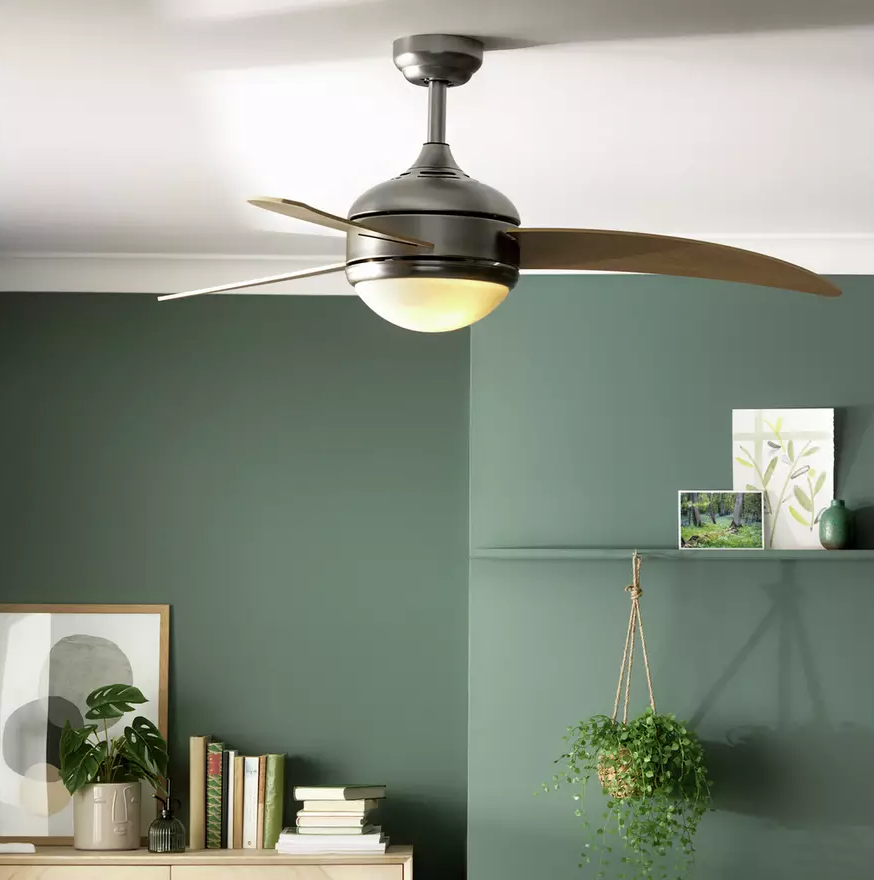
If you're looking for an energy efficient way to stay cool, a ceiling fan could be a worthwhile investment. While it won't lower the room temperature like an air conditioner, but it does create a breeze that can make you feel several degrees cooler. They're also inexpensive to run and can improve air circulation all year round.
So, How Do Ceiling Fans Work?
Ceiling fans circulate the air already in the room rather than cooling it. As the blades spin, they create a gentle breeze that helps sweat evaporate from your skin, making you feel cooler.
Unlike a desk or pedestal fan, which blows air in one direction, a ceiling fan moves air around the entire room. This creates more even airflow and helps reduce stuffy areas, making larger spaces feel more comfortable.
Many models also feature a reverse function too and instead of pushing a breeze down on to the room work to pull air up to the ceiling. This means that during the colder months, the ceiling fan can work to push warm air trapped near the ceiling back into the room, helping your heating system work more efficiently.
Are They Better Than Standard Fans?
It depends on how you plan to use them.
Portable fans are ideal if you want something that can be moved between rooms or positioned directly beside you. They're ready to use straight out of the box and are perfect for personal cooling.
Ceiling fans, however, are designed to cool the whole room rather than one person. They're permanently installed and may need to be fitted by a skilled and competent person.
Other benefits of ceiling fans are don't take up floor space and often operate more quietly at lower speeds. If you want consistent airflow throughout a bedroom or living room and reduced clutter on your floor, a ceiling fan is usually the better option.
What Should You Look For?
Airflow
The higher the figure, the more air the fan circulates. Larger rooms generally benefit from higher airflow ratings.
Fan Size
Choose a blade span that suits your room. Smaller rooms need smaller fans, while larger living areas often require blades measuring 132cm or more for effective air circulation.
Motor Type
Many modern ceiling fans use Direct Current motors, which are quieter, offer more speed settings and use less electricity than traditional Air Con or fan motors.
Are Ceiling Fans Noisy?
Most modern ceiling fans produce between 25 and 50 decibels, making them quiet enough for bedrooms and home offices. If a fan develops excessive noise, it may simply need the blades balancing or fittings tightening.
Installation
Unlike portable fans, ceiling fans require permanent installation. Some can replace an existing ceiling light, while others may need additional wiring or ceiling support. If you're unsure, it's always best to contact a qualified electrician. Always refer to user manual before installing.
Pros and Cons of a ceiling fan
Pros:
- Low running costs.
- Energy efficient.
- Cools the whole room.
- Saves floor space.
- Many include lights, remote controls and reverse mode for winter.
Cons
- Doesn't reduce room temperature like an air con.
- Requires installation.
- Less effective than air conditioning during very hot weather.
- Not suitable for rooms with low ceilings.
Are Ceiling Fans Worth It?
For many homes, the answer could be yes. A ceiling fan offers quiet, low-cost cooling and provides better whole room airflow than a standard portable fan. While it won't replace air conditioning on the hottest days, it's an excellent way to stay comfortable while keeping electricity costs low.
If you're looking for an efficient, space saving cooling solution that can also help circulate warm air during winter, a ceiling fan is well worth considering.
View the full range here