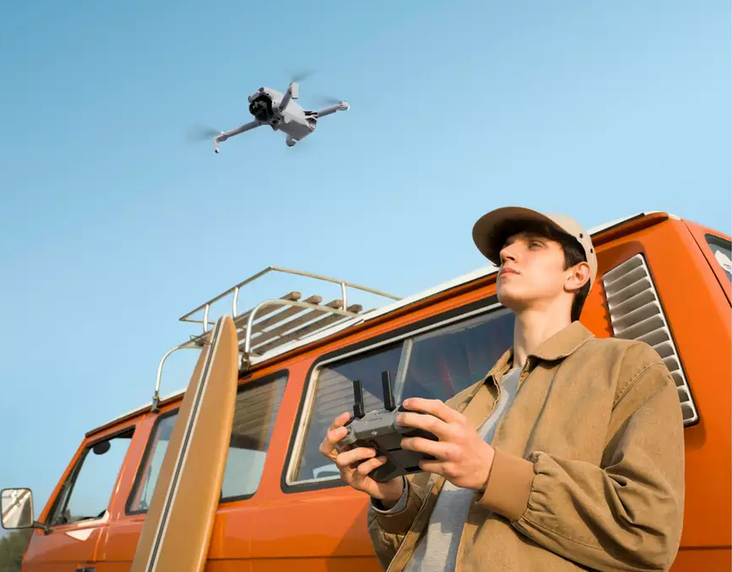
Ready to take your flying skills to new heights? Whether you're capturing sweeping views, exploring your local area from above or simply learning how to master the controls, drones can turn an ordinary day outdoors into something a little more exciting.
Before you send your drone soaring, there are a few things worth knowing. From getting your drone set up and choosing the right place to fly; to checking the weather and understanding the UK rules, a little preparation goes a long way.
Getting your drone ready
Start by reading the manufacturer's instructions and familiarising yourself with the controls. Charge the drone and controller, check that the propellers are fitted correctly and look for any signs of damage.
If your drone uses an app, check that it is updated and make sure the drone's firmware is up to date too. Take a few minutes to practise basic controls in a clear, open space before attempting more complicated manoeuvres.
You should also check the weight and class marking of your drone, as these affect the rules you need to follow.
Read our blog: Everything you need to know about drones!
Do I need a Flyer ID or Operator ID?
The rules depend on the weight of your drone and whether it has a camera.
- If your drone weighs 100g or more, you need a Flyer ID.
- If your drone weighs 250g or more or if it weighs 100g or more and has a camera, you need an Operator ID.
- Drones under 100g do not require these IDs, although getting a Flyer ID is recommended.
An Operator ID belongs to the person responsible for the drone, while the Flyer ID shows that the person flying it has passed the basic online competency test.
Choose your flying location carefully
Always check the location before using your drone. You are responsible for making sure there are no airspace restrictions affecting your flight.
Keep your drone within your direct visual line of sight and normally no higher than 120 metres (400 feet) from ground level.
The distance you need to keep from people and buildings depends on your drone's weight, class and the category you are flying in.
Some smaller drones can be flown closer to people, while larger drones have greater restrictions. You must never fly over crowds or ignore the restrictions that apply to your drone.
If you are taking off from private land, check that you have permission to use the land. Also remember that parks, nature reserves and other public spaces may have their own restrictions on drone use.
Read our blog: Common issues with Drones and how to fix them
Check the weather
A calm, dry day is usually best for flying.
Wind can make a drone difficult to control and can drain its battery faster. Rain and moisture can also damage the electronics unless your drone has been designed for wet conditions.
Always check the manufacturer's operating conditions before flying.
Avoid thunderstorms, heavy rain, strong winds and poor visibility. If the weather changes while you are flying, bring the drone back and land safely.
Cold weather can also affect battery performance, so allow batteries to reach the manufacturer's recommended temperature before use.
Be considerate when using the camera
A drone can capture much more than you may realise, so think about privacy before pressing record.
Avoid filming people where they would reasonably expect privacy and be particularly careful around homes and gardens. You should not use your drone to invade someone's privacy and think carefully before sharing footage online.
The person flying the drone is responsible for how it is used and for following privacy and data protection requirements.
Before every flight
A quick check can help prevent problems:
- Check your drone: Look for damage and secure the propellers.
- Check your battery: Make sure the drone and controller have enough charge for the flight.
- Check your location: Look for airspace restrictions and make sure you have permission to take off.
- Check the weather: Avoid strong winds, rain and poor visibility.
- Check your surroundings: Look out for people, buildings, trees, power lines and other obstacles.
- Check your IDs: Make sure you have the required Flyer ID and Operator ID.
- Keep it in sight: Never fly further than you can safely see and control your drone.
Most importantly, take your time. Flying a drone should be enjoyable, but it is your responsibility to make sure every flight is safe and legal.
Always check the latest CAA Drone Code before flying, as rules and requirements can change.
View the full range of Drones here