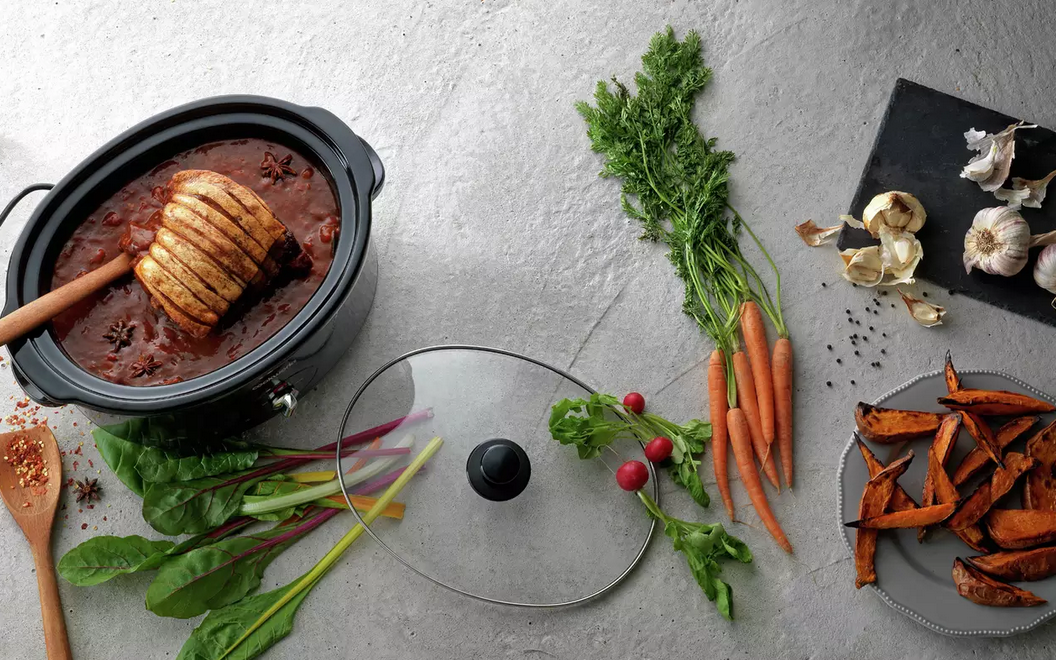
Slow cookers are loved for one simple reason: you set them, walk away, and come back to a hot, comforting meal. Perfect for the colder winter months. But one question comes up repeatedly for home cooks:
Should I cook on Low or High?
At first glance, it might seem like High just cooks food faster and Low cooks it slower. While that’s partly true, the real difference is a little more nuanced. Understanding how these settings work can help you get better flavour, better texture, and more reliable results from your slow cooker.
Let’s break it down.
What “Low” and “High” Really Mean
Contrary to popular belief, Low and High don’t cook at wildly different temperatures.
Most slow cookers reach roughly the same maximum temperature on both settings usually just below boiling. The key difference is how quickly they get there.
- Low setting: Heats up slowly and gently
- High setting: Heats up faster and more aggressively
Once the cooker reaches its target temperature, it maintains it. So, the main difference is the speed of heating, not the final heat itself.
Cooking on Low: Slow and Steady
The Low setting is ideal when you have time and want the best texture and flavour.
Best for:
- Tough cuts of meat
- Soups and stews
- Bean dishes
- Recipes with dairy or delicate ingredients
- All-day cooking (8 to 10 hours)
Low heat allows connective tissue in meats to break down slowly, resulting in tender, flavourful dishes. It also gives Flavours more time to blend without the risk of overcooking.
If a recipe doesn’t specify a setting, Low is usually the safest choice.
Cooking on High: Faster, Not Hotter
The High setting is perfect when you’re short on time but still want slow-cooked results.
Best for:
- Recipes that need to be ready sooner
- Lean meats like chicken breast
- Vegetable heavy dishes
- Pre-cooked ingredients
- Cooking times around 3 to 5 hours
Because High heats food more quickly, it can reduce cooking time by several hours. However, lean meats may dry out if left too long, and some ingredients can soften more than intended.
Is “High” Just Half the Time of “Low”?
In many cases, yes but it’s not an exact science.
As a general guideline: 4 hours on High = 8 hours on Low
That said, some recipes don’t convert perfectly. Dishes with large cuts of meat, thick sauces, or dairy often perform better on Low, even if High seems tempting.
Basic Cleaning and Maintenance
Looking after your slow cooker does not take much effort, but a little care goes a long way.
- Allow it to cool before cleaning
Always let the slow cooker cool completely before washing.
- Wash removable parts after each use
The ceramic pot and lid can usually be washed in warm, soapy water. Many are dishwasher safe so check the manufacturer guidance and refer to the user manual.
- Wipe the base carefully
Clean the outer heating base with a damp cloth only. Never place it in water.
- Avoid sudden temperature changes
Do not place a hot ceramic pot into cold water, as this may cause cracking.
- Store dry and clean
Make sure all parts are fully dry before storing to prevent odours.
Final Thoughts
The Low and High settings on your slow cooker aren’t about hot versus cold they’re about time and control.
Low offers tenderness, depth of flavour, and reliability
High provides speed and convenience without sacrificing comfort
Once you understand how these settings work, using your slow cooker becomes less guesswork and more confidence no matter what’s on the menu.
Happy cooking!
View the full range of Slow Cookers here