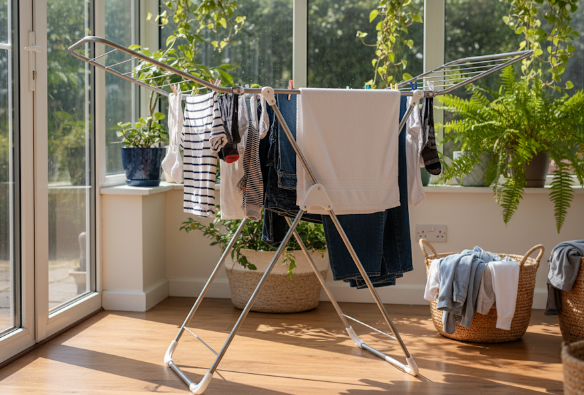
When the weather turns cold or damp, drying clothes indoors often becomes a necessity. Many people rely on a tumble dryer for convenience, but with rising energy prices and growing environmental concerns, running one regularly isn’t always the most eco- or budget-friendly option. If you’ve ever faced a room full of damp laundry on an airer and wondered why it’s taking forever to dry, you’re not alone. The truth is, drying clothes indoors isn’t just about hanging them up it’s about creating the right conditions for evaporation. Factors like airflow, humidity, and heat all play a crucial role. The good news? With a few smart tweaks, you can speed up the process while keeping your energy use low and your home comfortable, without relying on a tumble dryer.
Location Matters
Where you place your airer can make or break your drying time
- Near a Window or Heat Source: Position your airer near a sunny window or a radiator if possible. Gentle, natural warmth helps accelerate evaporation, allowing moisture to escape from fabrics more quickly. You don’t need intense heat even a slightly warmer spot in the room can significantly reduce drying time.
- Ventilation is Key: If the air in the room starts to feel damp, it’s important to let that moisture escape. Opening a window slightly or using the trickle vents built into many modern windows allows humid air to be replaced with drier air from outside. Even in colder weather, a small opening or trickle ventilation will have very little impact on the overall room temperature, especially compared to the benefit of faster drying and reduced condensation. Good airflow not only helps clothes dry more efficiently but also keeps your home more comfortable and protects against damp and mould.
Control Humidity with a Dehumidifier
Indoor drying adds moisture to the air, which can lead to condensation, uncomfortable living conditions and mould build up. A dehumidifier is one of the most effective tools for speeding up drying:
- Why It Works: Lower humidity means faster evaporation. Clothes dry quicker, and your home stays comfortable.
- Energy Efficiency: Modern dehumidifiers use relatively little power compared to tumble dryers.
- Extra Benefit: Helps prevent damp walls, condensation on windows, and mould growth.
Give Clothes Room to Breathe
- Crowding your airer extends drying time:
- Space between garments: Avoid overlapping clothes as air needs to circulate freely.
- Open Items: Unbutton shirts and jackets and spread them out to expose more surface area.
- Rotate Heavy Pieces: Flip thick garments halfway through drying for even airflow. To allow more even drying, avoid overloading the airer. Look to get two airers to allow more air between garments.
Upgrade Your Airer
If you dry your clothes indoors regularly, consider these options:
- Heated Airers: They use far less electricity than tumble dryers and can cut drying time dramatically.
- Heat Jackets or Covers: These trap warm air around your clothes, making heated airers even more efficient.
Eco-Friendly Bonus
Dry in smaller batches rather than overloading the airer. Better airflow means faster drying and less energy wasted.
Final Thoughts
Drying clothes indoors doesn’t have to mean damp rooms and endless waiting. By choosing the right location, managing humidity with a dehumidifier, and using smart tools like heated airers, you can dry laundry faster, keep your home comfortable, and reduce your environmental impact. Next time you hang up your clothes, think airflow, warmth, and moisture and watch how much quicker they dry.
View the full range here