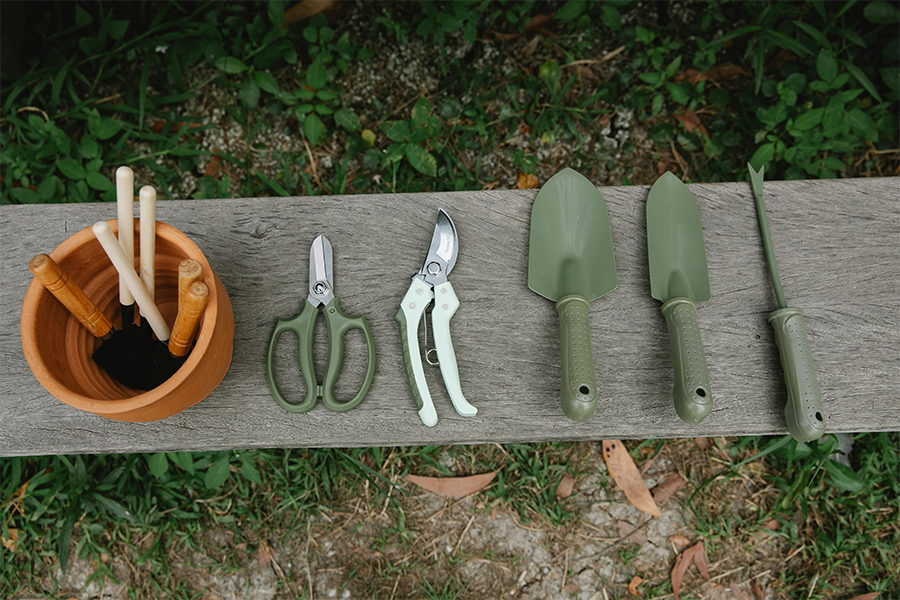
Gardening is one of life’s simplest pleasures, but to keep your garden thriving, you need tools that work efficiently and last for years. Proper cleaning and maintenance of your garden hand tools not only extends their lifespan but also ensures better performance, reduces the spread of plant diseases, and saves you money in the long run.
General Maintenance Tips
Garden tools are exposed to dirt, moisture, and plant residue. Without proper care, they can rust and degrade quickly as well as spread bacteria, fungi, and pests between plants.
Cleaning your Tools
A simple clean after each use goes a long way, knock off any loose soil or use a stiff brush to clean the blades and handles. A wire brush can work well for stubborn dirt.
For more in depth cleaning, use warm water and mild soap, scrub then rinse thoroughly. Avoid soaking your tools for long periods, as this can lead to rust.
Allow your tools time to air-dry in a well-ventilated area.
Check for Wear and Tear
It is also important to check your tools for general wear and tear. Look out for loose parts, cracks, dull or damaged blades. Checking, tightening or replace parts when needed will keep your tools safe and reliable.
Keep Blades Sharp
If blades edges become dull, a simple sharpening stone or metal file works well to keep them looking sharper and preforming better. Sharp blades on tools like secateurs make for clean cuts and reduced chance of damage or disease to your plants.
Caring For Wood
Wooden handles over time can crack and splinter if left out in the elements. Sand rough spots with fine sandpaper, then apply linseed oil to keep wood hydrated and sealed. Linseed oil can also be used on blades to keep them from rusting.
Disinfecting Your Tools
Disinfecting is especially important when pruning or working with diseased plants. Not properly cleaning or disinfecting tools increases the chances of spread disease to other plants.
After cleaning, wipe any blades with rubbing alcohol or use a diluted bleach and water solution, usually about 10 part bleach to 1 part water. Then rinse and dry thoroughly.
Tips For Protecting Your Tools
Silicone free lubricants such as WD‑40 are a handy addition to your garden tool maintenance kit. These products preform several jobs and can help with cleaning, rust removal, and protection for your tools.
- To remove stubborn dirt or residue, spray a light coating onto the metal surfaces, wipe clean with a non-abrasive cloth.
- To help remove surface rust, spray directly onto the rusty area, let it sit for a few minutes, then scrub with steel wool or a wire brush. Wipe the area clean and reapply a light coat for protection.
- Spray lubricants are widely used for creaky door hinges but is also great for tools. To help keep the moving parts working smoothly, spray on the hinges, springs, and joints.
Store Your Hand Tool Properly
Good storage habits are just as important as cleaning. Ensure tools are put away clean and dry after each use. The perfect place for them is hanging on hooks or racks, off the ground and in a dry shed or garage.
Final Thoughts
Maintaining your garden hand tools may seem over the top, but it doesn’t have to be time-consuming and the benefits to your plant's health are worth a little bit of extra care.
With a few simple routines and the smart use of products like WD‑40 you can keep your tools in excellent condition.
Think of it this way: care for your tools, and they’ll take care of your plants and help keep your garden looking its best all year round.
Check out our select of garden hand tools here